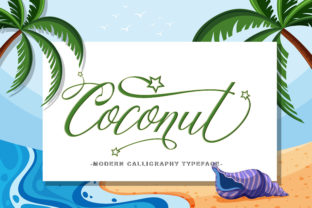
Coconut Script: Elevating Designs with Modern Calligraphy
In a world saturated with digital noise, a typeface that carries a human touch can be the difference between blending in and standing out. Coconut Script is that kind of font. It’s a modern calligraphy typeface that feels both contemporary and timeless, designed not just to display text, but to convey emotion and sophistication. What sets it apart is its construction. Every curve and connection was crafted with precision on a structured horizontal and vertical path, giving it a reliability that many script fonts lack. This isn’t a chaotic, hard-to-read scribble; it’s a controlled, elegant flow that brings clarity to its artistry.
The personality of Coconut Script is confident and graceful. It carries the energy of a handwritten note but with the polish of professional lettering. The natural, flowing strokes have a rhythm that guides the eye, making it feel personal and approachable. Yet, its clean lines and consistent baseline ensure it never looks messy or amateur. This balance is its core strength. It can feel luxurious and exclusive for a high-end brand, or warm and inviting for a boutique or personal project. The included swashes are a thoughtful bonus, offering an easy way to add a flourish and a final touch of elegance without needing advanced design skills.
Where Coconut Script Truly Shines: Real-World Applications
Understanding a font’s personality is one thing; knowing where to apply it is where the real value lies. Coconut Script excels as a display font, meaning it’s built for impact in headlines, logos, and short-form text where its details can be fully appreciated. In logo design, it immediately injects a brand with a sense of craftsmanship and care. Imagine it on the logo for a boutique coffee roaster, a handmade jewelry line, or a premium bakery—it tells a story of quality and attention to detail before a customer even reads the word.
For marketing and branding, its applications are vast. It’s a natural fit for wedding invitations and event stationery, setting a tone of romance and sophistication. On social media graphics, it can make quotes, announcements, and promotional banners feel more engaging and personal, stopping the scroll in a feed of generic sans-serif text. In packaging design, it can elevate the perceived value of a product, making a simple label on a candle jar or a cosmetics box look premium. For editorial design, use it for pull quotes or chapter titles in a book or magazine to add a touch of elegance and break up long blocks of text.
Even in digital spaces, when used strategically, it holds its own. A beautifully crafted web design might use Coconut Script for a hero section headline or a special announcement, paired with a clean sans serif font for body copy. For entrepreneurs and small business owners, it’s a powerful design asset that can help create a cohesive and memorable brand identity across letterheads, signage, posters, and even custom merchandise like t-shirts.
Practical Guidance: Choosing and Using Coconut Script Effectively
Adding a premium font like this to your toolkit is an investment, so it’s wise to evaluate its fit for your project. Start by considering your audience and message. Coconut Script communicates elegance, personality, and a human touch. If your brand or project aims for a stark, minimalist, or ultra-corporate feel, a different typeface might be more appropriate. But if you want to convey warmth, creativity, or luxury, it’s a strong contender.
One of the most critical steps is testing font pairing. A script font like this needs a supporting cast. It pairs beautifully with a simple, geometric sans serif font for body text, creating a clear visual hierarchy where the script grabs attention and the sans-serif ensures readability. It can also work with a sturdy serif font for a more traditional, layered look. Always test your pairings at different sizes to ensure the combination feels balanced and legible on both screen and print.
Before finalizing your choice, review all the included styles and glyphs. The swashes and alternate characters are part of what you’re paying for—learning to use them properly can take your design from good to great. Check the licensing as well. Ensure the commercial font license covers your intended use, whether it’s for a client’s logo, a product you sell, or a website you’re building. Finally, always test for readability in context. Set your headline, step back, and see if it’s instantly clear. A beautiful font that’s hard to read fails at its primary job.
Ultimately, Coconut Script is more than just a creative font; it’s a tool for storytelling. By understanding its strengths and applying it thoughtfully, you can use it to create designs that don’t just look beautiful, but also connect with your audience on a more human level, enhancing brand perception and driving audience engagement.